

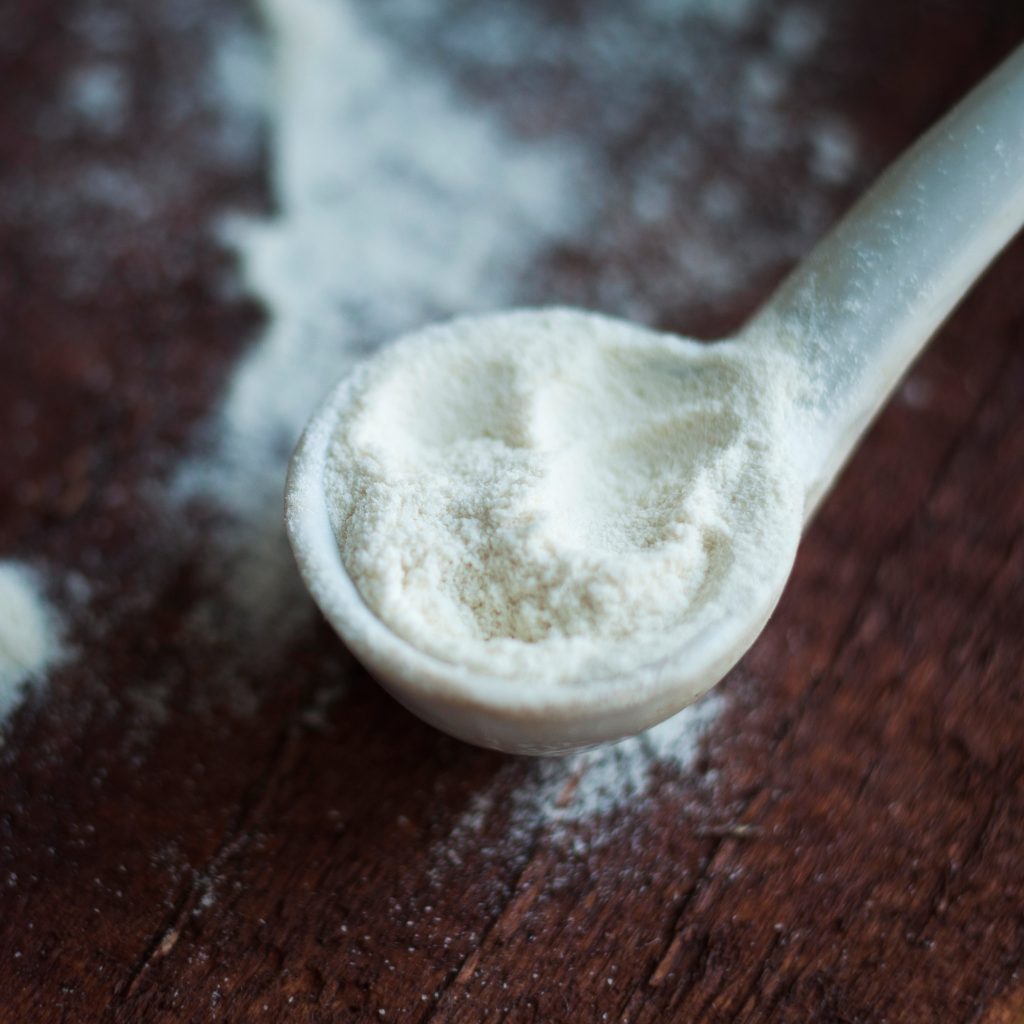
Description
Even though it sounds strange and the E-number (415) might be intimidating, this thickener is of natural origin – it’s obtained by fermenting (cultivating) Xanthomonas campestris bacteria, and the gum gets its name from the bacteria.
What can you do with it?
Xanthan gum thickens (swells in liquid), binds (forms a film, glues together), gels, stabilizes, prevents separation or layering, helps evenly disperse solid particles in liquid, prevents moisture evaporation, and improves adhesion. Here’s how these properties can help you in the kitchen:
- Most often, xanthan is added to gluten-free flours, where it acts as gluten – this allows these products to bake up lighter, airier, more porous, more elastic, and stay fresh longer. For the exact same reason, you can also add xanthan to gluten-containing flours and doughs – your buns or bread will be softer and stay fresh longer. It’s the most suitable thickener/dough improver specifically for yeast doughs. You can achieve an especially good effect by combining xanthan with guar, konjac, and/or gum arabic. The total concentration of added gums should be up to 2% of the flour weight.
- Add a pinch of xanthan to salad dressing or soup – it won’t separate when you serve it; for example, if an olive oil-lemon dressing needs to be served in a bowl – it will look neat because it will maintain its homogeneous emulsion texture, and spices and herbs will be evenly dispersed, not settling at the bottom.
- Add it to homemade ice cream or sorbet – it will freeze “creamier,” no ice crystals will form, and it will have a more pleasant, seemingly “melting” sensation in your mouth when eaten.
- Adding xanthan to dairy-containing foods extends their shelf life – they won’t spoil as quickly.
- Add it to lemon tart filling or custard – it will be exceptionally smooth and “melt-in-your-mouth.”
- If you add it to pasta sauce – it will cling better to the pasta; salad dressing – to lettuce leaves, etc.
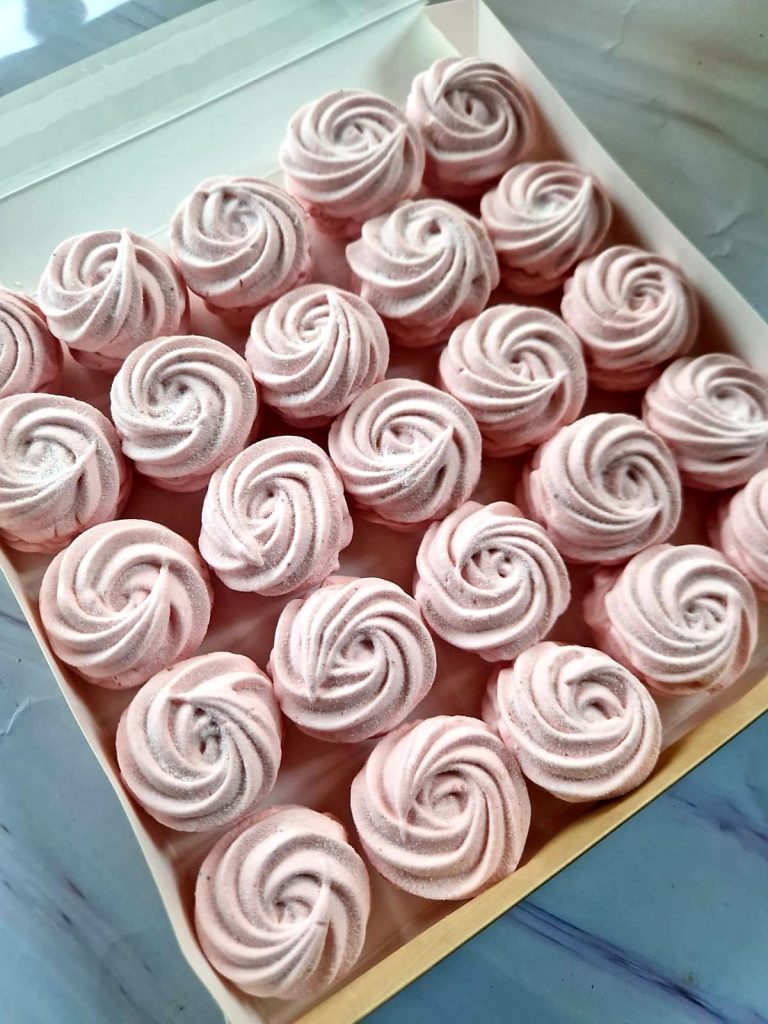
- When making meringue from aquafaba, a pinch of xanthan makes it more resistant to humidity – the finished cookies won’t get soggy or collapse.
- When making jams or marmalades with a small amount of sugar, pectin will be less effective (as it needs sugar to gel) – in such cases, xanthan can help improve the texture of the jam, preserve, or marmalade.
- People who have difficulty swallowing sometimes add xanthan to foods and drinks to reduce the risk of choking.
- By its chemical structure, xanthan is a fiber – a polysaccharide. This means that in addition to the effects mentioned above, you’ll also get benefits similar to what we expect from vegetable fibers, bran, flaxseeds, etc.
Usage and dosage.
To prevent xanthan from forming lumps, it needs to be added correctly. For use in doughs, it’s best to mix it into the dry (flour) mixture before adding liquid. To add to liquids (e.g., a drink or salad dressing), it’s recommended to stir the liquid to create a vortex, then add the powder, mixing it in quickly.
As a gluten substitute – ¼ – ½ tsp per cup of flour, or up to 2% concentration of the total mass, depending on the recipe.
As a thickener – a knife tip to ¼ tsp per 1 cup of liquid.
In gluten-free products, especially those made from yeast dough, it’s recommended to add it together with guar gum: xanthan provides elasticity, while guar gum ensures greater volume and a better (less tough) texture. If the amount of eggs and/or fats in the product also needs to be reduced, it’s recommended to add gum arabic as well.
Do not use if you have allergies or intolerance. Suitable for vegans. Suitable for people with gluten, soy, corn, or dairy intolerance.
In large doses, it can have a laxative effect – you shouldn’t consume more than 7-15g of xanthan per day (depending on body weight). Since xanthan is a fiber, it can cause bloating in infants and people with a more sensitive digestive system; therefore, it is not recommended for children under 1 year of age, or for those who experience increased bloating after consuming a lot of fiber.
Properties.
Does not change the taste of the product/food. Clear, transparent (does not create cloudiness). Dissolves in both hot and cold water. Works and is stable in both acidic and salty environments, not degraded by enzymes (e.g., when adding fresh kiwi or pineapple). Practically does not lose its properties even when heated, frozen, and thawed, or in mixtures with milk (calcium). Pseudoplastic – becomes “thinner” when shaken, and regains its original thickness when the mass stops moving. Creates pleasant textures. Economical – effective even in very small doses.
Compared to other gums, xanthan is:
– the most elastic, stickiest
– the most effective – requires the smallest amount
– the most widely applicable – effective when freezing-thawing and heating, minimally affected by other substances (salt, sugar, calcium, acidity, enzymes, etc.)
– the clearest, most transparent
– the most neutral in taste
– the most suitable for improving elasticity in flour mixtures, especially in yeast doughs and gluten-free pastries
Reviews
There are no reviews yet.