

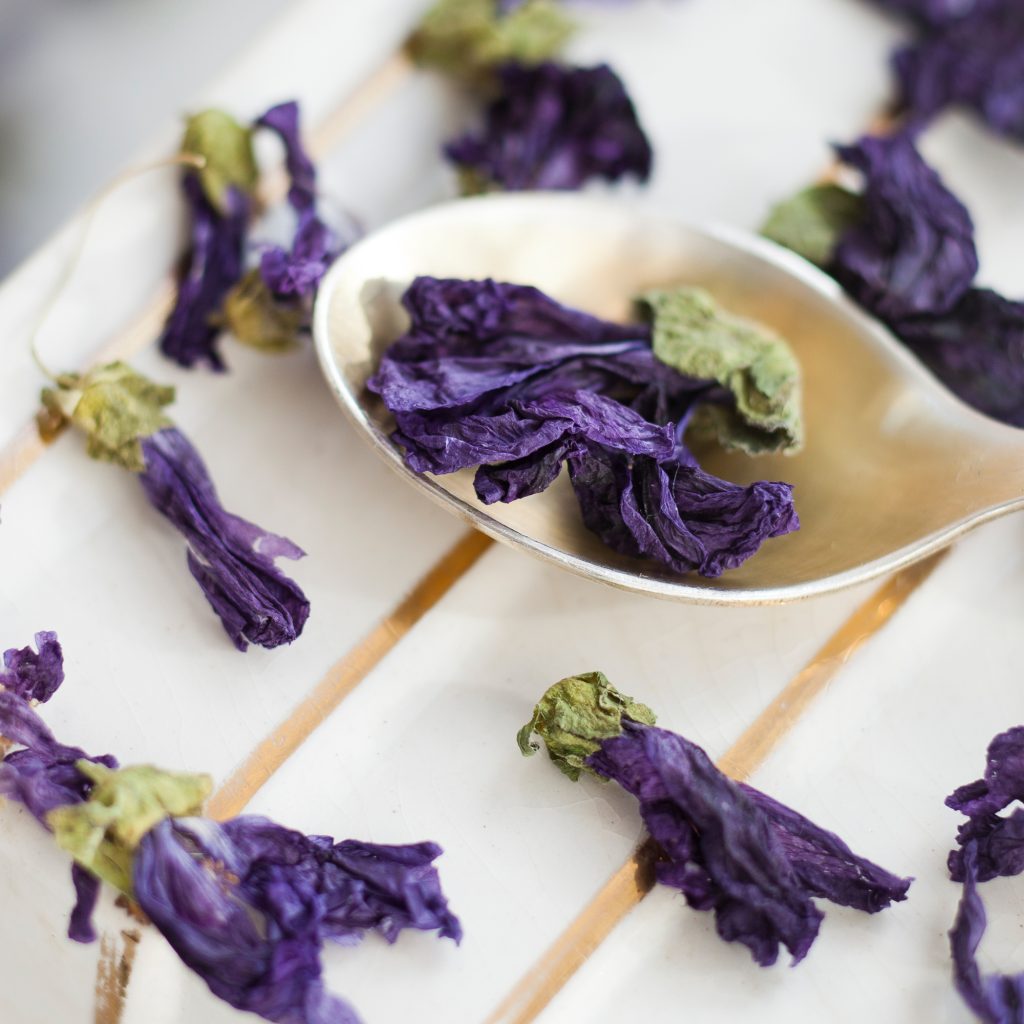
Description
Mallow flower tea boasts an incredibly beautiful blue hue and offers great value to your body. Mallow flowers possess anti-inflammatory properties. You can blend them with other wild herbs and flowers to create your own special tea. Literature suggests that mallow flower tea balances the mind, calms the heart, and helps you recover from stress.
Mallow flowers are rich in carotenoids—natural plant pigments! This makes the tea beneficial for healthy vision and skin. Mallow flower tea has long been used for various respiratory issues (including vocal cords, tonsils, and the oral cavity), as well as for chronic constipation.
We’ve supplemented our description of mallow flowers with information compiled by Iveta Galēja:
Wild mallow is a very close relative of the hollyhocks found in our flowerbeds and has been widely used in healing since ancient times. It is often called blue mallow because the flowers lose their pink and purple colors as they dry, turning an intense blue. Historical records show that almost all great ancient physicians described the valuable properties of mallow, emphasizing it as a universal remedy for all ailments—and modern scientists have indeed confirmed many of these early assumptions. In Roman times, drinking mallow juice daily was recommended to strengthen the body and its resistance to disease. Later, it was highly valued by healers of the soul, who recommended it for morbid melancholy, depression, and a bitter temperament. Today, dried flowers are mostly used in healing, while leaves and roots are used less frequently. Incidentally, a powerful blue-violet dye is extracted from mallow flowers.
For health
*Mallow flowers are an effective remedy for colds, irritating coughs, bronchitis, mouth and throat inflammation, and gastritis—this ancient knowledge has been confirmed by modern clinical studies.
*Mallow flower extract is used for rinsing the throat and mouth if an infection has set in:
Pour 200–250 ml of water (at room temperature) over 2 tsp of dried mallow flowers and let it sit for 10–12 hours. Then strain and use for rinsing or drink slowly, sip by sip.
*For a severe cough, mallow flower tea can be supplemented with plantain, primrose, and sage for even better results.
*Externally, mallow is used to treat skin diseases and wounds, and to soothe sunburnt skin.
In the kitchen
*Add young, tender leaves to salads—they provide a very pleasant flavor. Unripe seed pods are also used in salads and preserved in oil.
*Add larger, older leaves to soups and stews; they serve as both a leafy vegetable and a thickener. In Italy, lightly boiled leaves are often mixed with olive oil, lemon juice, salt, and pepper.
*The flowers work well in drinks—depending on the amount, they tint the beverage in pink, purple, and even bluish tones.
*Use the flowers in desserts: puddings, creams, cakes, and ice cream.
In cosmetics
*Mallow is a wonderful plant for caring for sensitive and dry skin.
*Mallow extract is used in creams; it is combined with olive, evening primrose, and jojoba oils to restore skin elasticity, especially after childbirth.
*Substances in mallow help lighten so-called age spots.
*A bath with mallow additive benefits inflamed skin and skin suffering from eczema.
Reviews
There are no reviews yet.