Summer Wormwood / Artemisia annua herb

Price range: 1,94 € through 16,63 €

Summer Wormwood / Artemisia annua herb

An aromatic herbal tea with a bitter-sweet taste and a long history of use.

Artemisia annua, or summer wormwood, is an annual plant of the wormwood genus that has been used for centuries in Eastern healing traditions, especially in Traditional Chinese Medicine. The plant has been extensively studied for its natural bioactive compounds, including artemisinin, flavonoids, phenolic compounds, and essential oils. Artemisinin is a unique and very special active substance, the research of which has been recognized with a Nobel Prize in Medicine. Annual wormwood also contains a rich composition of flavonoids and essential oils, which collectively provide a wide range of effects on the body.

Studies describe that Artemisia annua extracts and their compounds possess antioxidant, anti-inflammatory, antimicrobial, and immunomodulatory properties.

The flavonoids and other plant substances found in summer wormwood herb will enrich your body with natural antioxidants. The tea has a distinct, bitter-aromatic character, so it will be appreciated by those who enjoy stronger, medicinal herb teas. Traditionally, bitter-containing plants are used before or after meals to improve digestion.

Artemisia annua tea will help cleanse your body, strengthen immunity during virus season, and maintain healthy digestive tract microflora. Unlike common wormwood, this species has a much more pleasant, sweeter aroma, although the characteristic bitterness of wormwood remains in the taste.

To prepare the tea, pour hot, but definitely not boiling, water over one teaspoon of the herb and let it steep for 5 to 10 minutes. It is recommended to enjoy the prepared drink one cup, once or twice a day, before meals. If the taste seems too intense, you can easily reduce the bitterness by adding a little honey or lemon juice to the tea. As this is a potent herb, it should be used in courses – for up to two weeks, followed by an equally long break.

Please note that this tea should not be used by pregnant women, breastfeeding mothers, or people with stomach ulcers.

Important: This tea is not recommended for use during pregnancy and breastfeeding, for children, people with hypersensitivity to plants of the daisy family, or people with liver diseases or serious chronic conditions without consulting a doctor.

References:

  1. Swamikannu, B., Umapathy, V. R., Natarajan, P. M., et al. (2025). Unlocking the therapeutic benefits of Artemisia annua: A comprehensive overview of its medicinal properties. Journal of Pharmacy & Bioallied Sciences, 16(Suppl 5), S4248–S4253. https://doi.org/10.4103/jpbs.jpbs_1250_24
  2. Ferreira, J. F. S., Luthria, D. L., Sasaki, T., & Heyerick, A. (2010). Flavonoids from Artemisia annua L. as antioxidants and their potential synergism with artemisinin against malaria and cancer. Molecules, 15(5), 3135–3170.
  3. Kim, W. S., Choi, W. J., Lee, S., et al. (2015). Anti-inflammatory, antioxidant and antimicrobial effects of Artemisia annua L. International Journal of Molecular Sciences, 16(2), 2769–2780.
  4. Bilia, A. R., Santomauro, F., Sacco, C., Bergonzi, M. C., & Donato, R. (2014). Essential Oil of Artemisia annua L.: An Extraordinary Component with Numerous Antimicrobial Properties. Evidence-Based Complementary and Alternative Medicine.
  5. Ruperti-Repilado, F. J., Haefliger, C., Rehm, S., et al. (2019). Danger of Herbal Tea: A Case of Acute Cholestatic Hepatitis Due to Artemisia annua Tea. Frontiers in Medicine, 6, 221.
  6. National Institute of Diabetes and Digestive and Kidney Diseases. Artemisinin. LiverTox, NCBI Bookshelf.
  7. NobelPrize.org. Tu Youyou – Facts. The Nobel Prize in Physiology or Medicine 2015.


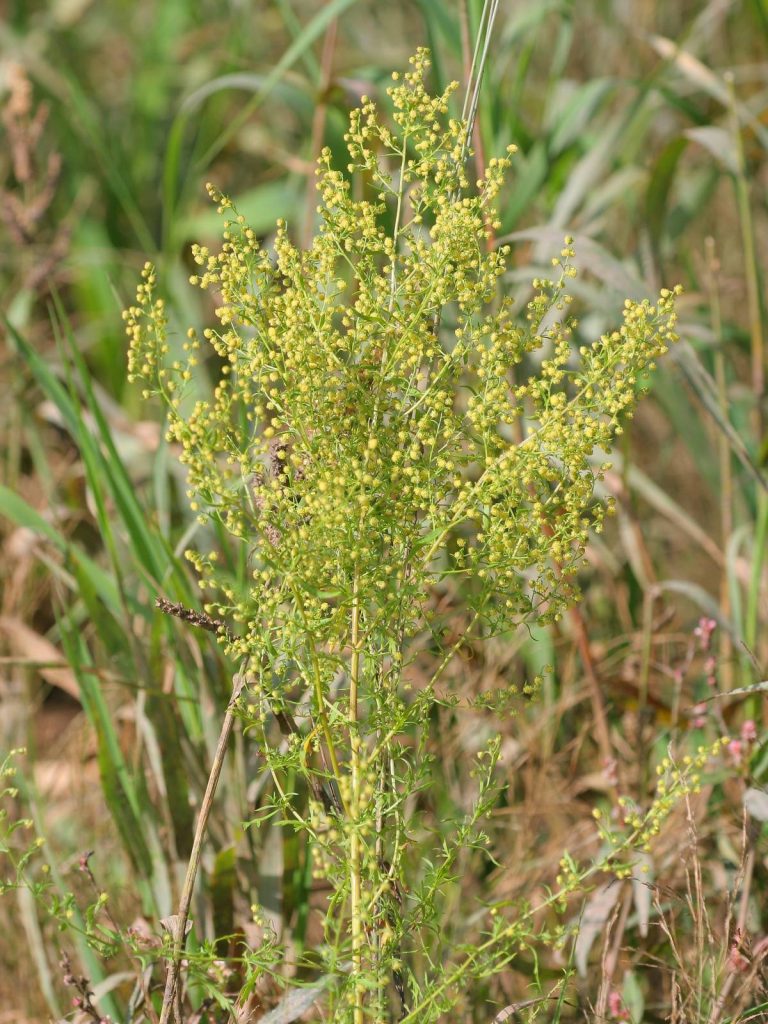
(photo: By Kristian Peters — Fabelfroh 11:39, 16 September 2007 (UTC) – photographed by Kristian Peters, CC BY-SA 3.0, https://commons.wikimedia.org/w/index.php?curid=2761987)
Consistency
Svars

Description

Summer Wormwood / Artemisia annua herb

An aromatic herbal tea with a bitter-sweet taste and a long history of use.

Artemisia annua, or summer wormwood, is an annual plant of the wormwood genus that has been used for centuries in Eastern healing traditions, especially in Traditional Chinese Medicine. The plant has been extensively studied for its natural bioactive compounds, including artemisinin, flavonoids, phenolic compounds, and essential oils. Artemisinin is a unique and very special active substance, the research of which has been recognized with a Nobel Prize in Medicine. Annual wormwood also contains a rich composition of flavonoids and essential oils, which collectively provide a wide range of effects on the body.

Studies describe that Artemisia annua extracts and their compounds possess antioxidant, anti-inflammatory, antimicrobial, and immunomodulatory properties.

The flavonoids and other plant substances found in summer wormwood herb will enrich your body with natural antioxidants. The tea has a distinct, bitter-aromatic character, so it will be appreciated by those who enjoy stronger, medicinal herb teas. Traditionally, bitter-containing plants are used before or after meals to improve digestion.

Artemisia annua tea will help cleanse your body, strengthen immunity during virus season, and maintain healthy digestive tract microflora. Unlike common wormwood, this species has a much more pleasant, sweeter aroma, although the characteristic bitterness of wormwood remains in the taste.

To prepare the tea, pour hot, but definitely not boiling, water over one teaspoon of the herb and let it steep for 5 to 10 minutes. It is recommended to enjoy the prepared drink one cup, once or twice a day, before meals. If the taste seems too intense, you can easily reduce the bitterness by adding a little honey or lemon juice to the tea. As this is a potent herb, it should be used in courses – for up to two weeks, followed by an equally long break.

Please note that this tea should not be used by pregnant women, breastfeeding mothers, or people with stomach ulcers.

Important: This tea is not recommended for use during pregnancy and breastfeeding, for children, people with hypersensitivity to plants of the daisy family, or people with liver diseases or serious chronic conditions without consulting a doctor.

References:

  1. Swamikannu, B., Umapathy, V. R., Natarajan, P. M., et al. (2025). Unlocking the therapeutic benefits of Artemisia annua: A comprehensive overview of its medicinal properties. Journal of Pharmacy & Bioallied Sciences, 16(Suppl 5), S4248–S4253. https://doi.org/10.4103/jpbs.jpbs_1250_24
  2. Ferreira, J. F. S., Luthria, D. L., Sasaki, T., & Heyerick, A. (2010). Flavonoids from Artemisia annua L. as antioxidants and their potential synergism with artemisinin against malaria and cancer. Molecules, 15(5), 3135–3170.
  3. Kim, W. S., Choi, W. J., Lee, S., et al. (2015). Anti-inflammatory, antioxidant and antimicrobial effects of Artemisia annua L. International Journal of Molecular Sciences, 16(2), 2769–2780.
  4. Bilia, A. R., Santomauro, F., Sacco, C., Bergonzi, M. C., & Donato, R. (2014). Essential Oil of Artemisia annua L.: An Extraordinary Component with Numerous Antimicrobial Properties. Evidence-Based Complementary and Alternative Medicine.
  5. Ruperti-Repilado, F. J., Haefliger, C., Rehm, S., et al. (2019). Danger of Herbal Tea: A Case of Acute Cholestatic Hepatitis Due to Artemisia annua Tea. Frontiers in Medicine, 6, 221.
  6. National Institute of Diabetes and Digestive and Kidney Diseases. Artemisinin. LiverTox, NCBI Bookshelf.
  7. NobelPrize.org. Tu Youyou – Facts. The Nobel Prize in Physiology or Medicine 2015.


(photo: By Kristian Peters — Fabelfroh 11:39, 16 September 2007 (UTC) – photographed by Kristian Peters, CC BY-SA 3.0, https://commons.wikimedia.org/w/index.php?curid=2761987)
Additional information

Svars

20g, 50g, 100g, 200g

Reviews

There are no reviews yet.

Be the first to review “Summer Wormwood / Artemisia annua herb”

Your email address will not be published. Required fields are marked *