

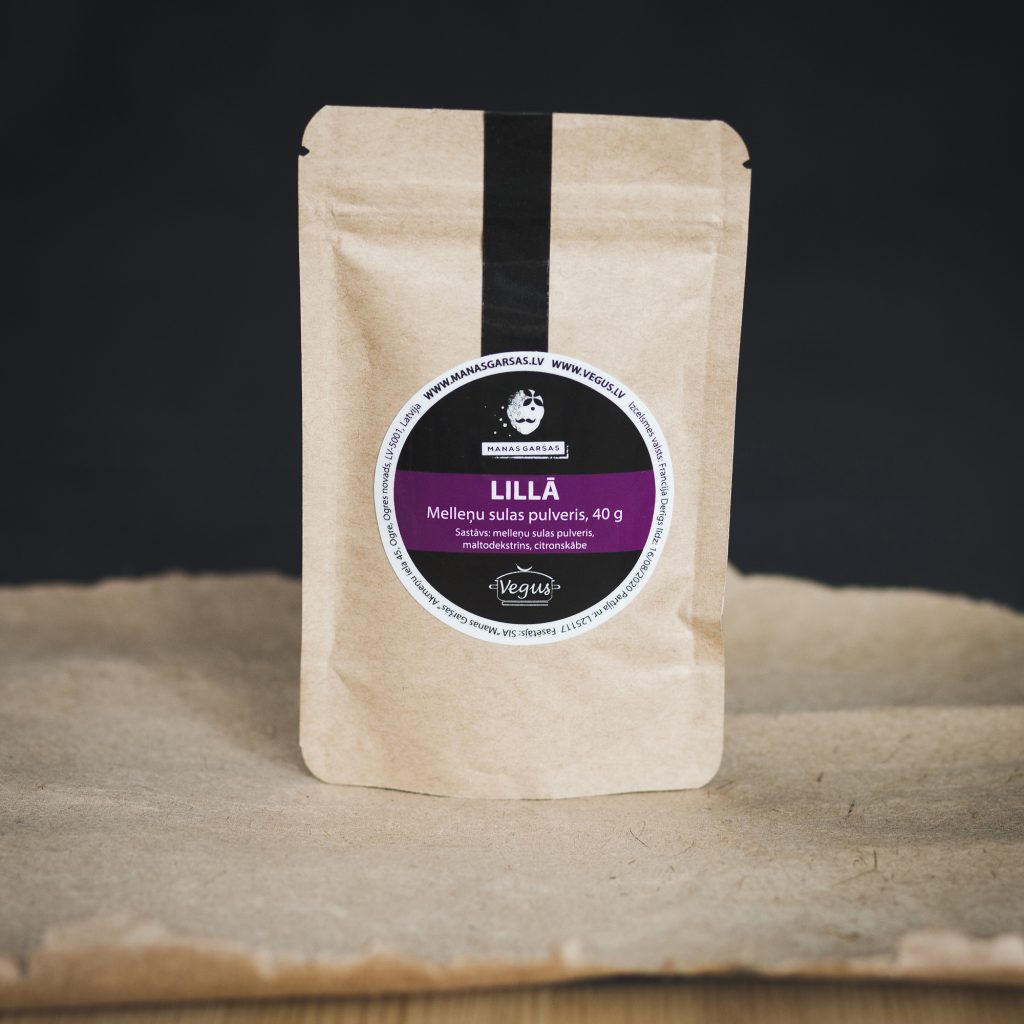
Description
Blueberry – a purple, distinctly reddish-violet shade. It has a pleasant sweet and sour taste and a neutral aroma. When using in products that are heated (like cookies), we recommend adding lemon juice to stabilize the color. Thanks to its delightful taste and color, it’s perfect for dusting various creations, adding to desserts and cake creams, cocktails, and ice cream (try it, for example, with plombir or blueberry/blackberry/wild berry ice cream, along with just a tiny hint of lavender).
These 100% plant-based powders are suitable for use in cakes, creams, glazes, cookies, ice creams, cocktails, and other sweet and savory dishes. They’re also great for adding to chocolate and for brush decorating. The super fine and even grind means you can use these powders in creams and glazes for piping decorations – the powders disperse smoothly without creating grittiness or lumps. The high quality ensures an unusually vibrant and stable shade for natural colors, even when adding a relatively small amount of powder (compared to homemade or typical natural colorings on the market).
Usage and Storage.
For pastel shades, add 1-2 tsp (2-6g) of powder per approximately 500g of mass. For an intense shade, use 50-200g of mass. These powders are also suitable for people with dairy/lactose intolerance, vegetarians, vegans, and children. Do not use if you have an allergy or intolerance to the specific plant. Store in a dark, dry place in a sealed container. Protect from drastic temperature fluctuations and do not store near a constant heat source (e.g., radiators).
Specifics of Natural Colorings.
Natural powders usually have a scent and taste. You can flavor them with food essences (like peppermint) if you want to change or mask the taste. Fruit powders will give products a pleasant taste and tartness. Before adding to the mass, you can mix the powders with a small amount of vodka (to create a “slurry”) – this will brighten the shade. By mixing with a larger amount of vodka, you can draw lines, contours, or paint with a brush like watercolors (the alcohol evaporates quickly, so there will be no alcohol content in the final product). Sometimes the shade can change as a result of heating (for example, when baking dough products with added powders, or heating in a microwave). Also, do not leave the powder or colored product in bright, direct sunlight for extended periods. You can mix powders with each other, but the resulting shade might differ from mixing synthetic colors, so it’s recommended to first try with a small amount of the mass to be colored to ensure the new shade is satisfactory. The shade is also influenced by the color of the mass itself; for example, coloring a yellow mass (butter/margarine) with pink will create a warmer hue than mixing it into a white mass (like cottage cheese). It’s best to mix creams or glazes with powders at least 3 hours before decorating and prepare the mass lighter than the desired final result, as the powders absorb gradually and the final intensity appears over time.
Reviews
There are no reviews yet.