

Description
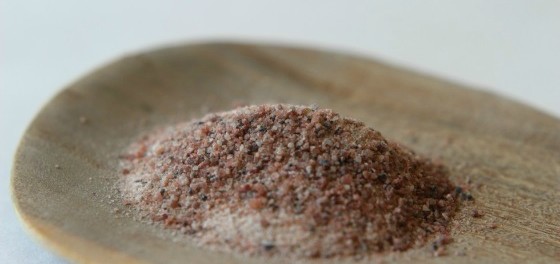
In the Himalayas, they mine not only the widely known pink Himalayan salt but also the very popular in India, yet less known in the West, kala namak – black salt. When ground, it’s grayish-pink; it gets its ‘black’ name from the dark burgundy-violet hue of its unground crystals. Kala namak contains less sodium chloride than table salt because it’s rich in other minerals. For example, iron gives it its color, while sulfur gives it an aroma similar to hard-boiled eggs (just like eggs themselves). Kala namak also contains 3-5 times more potassium and calcium than regular table salt.
Kala namak is a characteristic ingredient of the Indian spice blend chaat masala, and the salt itself is often used for seasoning street food snacks, chutneys, curries (chicken, fish, lentil), and raita (yogurt-vegetable mix). A pinch of kala namak is often sprinkled on fresh fruits like mango, watermelon, or strawberries.
Kala namak has a cooling, laxative, nerve-calming, mood-stabilizing, and digestion-improving effect without irritating the stomach (e.g., in cases of gastritis). Kala namak salt is popular in vegetarian and vegan cuisine because it allows you to imitate the taste of eggs – in various mayonnaise-like sauces, cold soups, nettle and sorrel soups, Olivier-type salads, and more.
Thanks to these egg-flavor-imitating properties, even people with egg allergies can enjoy their favorite taste by adding kala namak salt to their food. When kala namak is heated (used in hot dishes), the sulfur aroma mostly dissipates, leaving an umami note in the flavor (a savory, delightful, rich taste note).
Try kala namak by sprinkling it on homemade popcorn, making a refreshing kefir drink in the summer (kefir, mint, cumin, kala namak), adding it to Indian dishes, or using it instead of hard-boiled eggs. Experience a new taste sensation by sprinkling a pinch of kala namak on a piece of fresh fruit just before eating.
Dita Lase www.vegus.lv
Reviews
There are no reviews yet.